
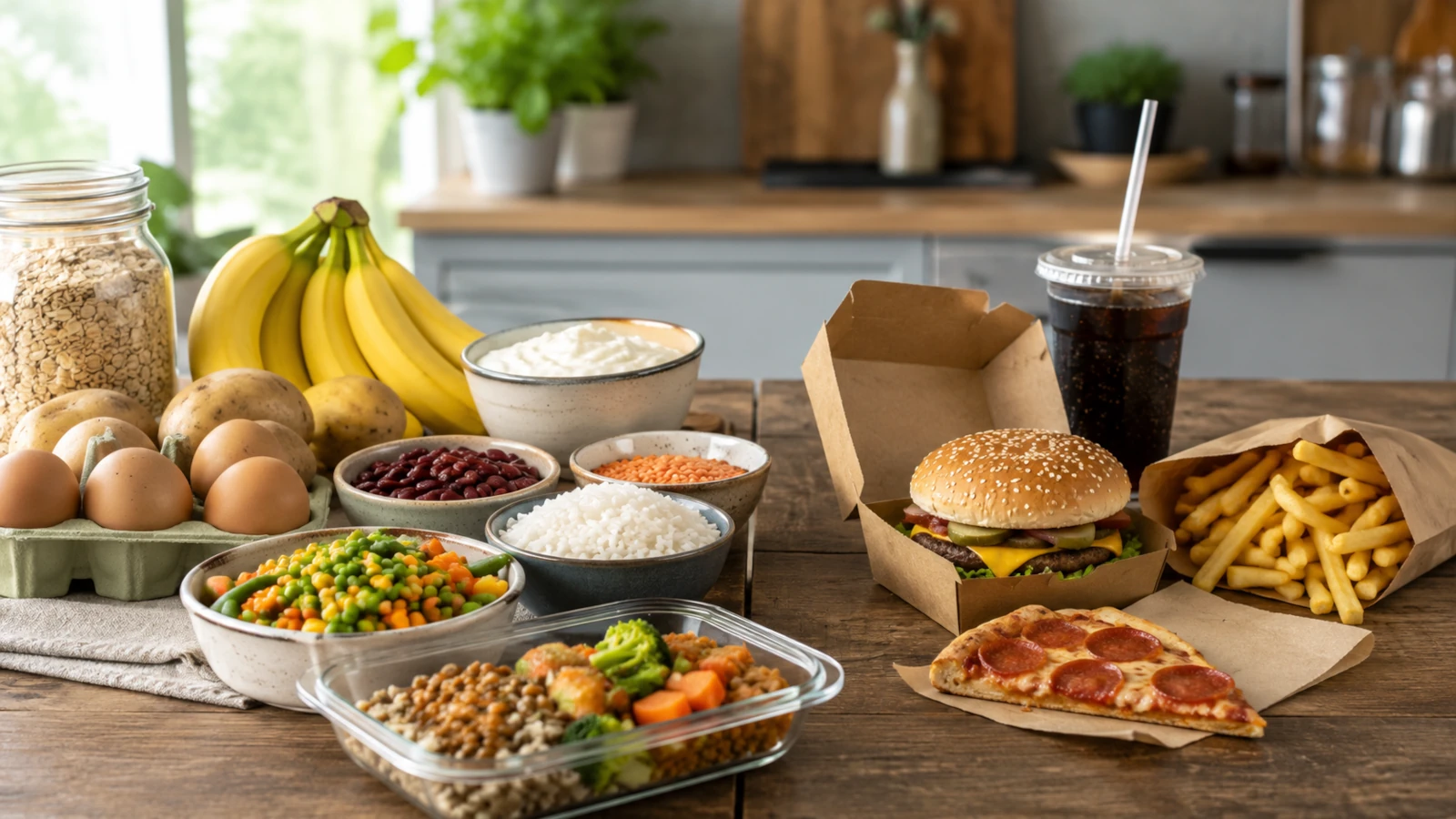
But is unhealthy food really cheaper?
The honest answer is: it depends on what you compare. Fast food can look cheap when you only look at price per calorie. But when you include protein, satiety, fiber, nutrients and long-term control, the comparison often changes.
Healthy eating does not have to mean expensive superfoods, perfect meal prep or organic everything. The real foundation is simple staple foods, enough protein, filling meals and realistic planning.
TL;DR: The key points
- Fast food often feels cheap because it is available immediately, requires no planning and delivers a lot of calories.
- Price per calorie is not the same as price per nutrient, protein or satiety.
- Ultra-processed foods can be convenient in the short term, but they often make goal-oriented nutrition harder.
- Healthy eating is still not easy for everyone. Time, budget, access to stores and family life matter.
- Budget-friendly fitness basics include potatoes, rice, oats, eggs, Greek yogurt, cottage cheese, beans, lentils, frozen vegetables and affordable protein sources.
- Meal prep does not have to be complicated. Even a few prepared food building blocks can reduce expensive last-minute choices.
- The goal is not perfect eating. The goal is affordable, filling and repeatable eating.
Why fast food often feels cheaper
Fast food has one major advantage: it is available right now.You do not have to shop, cook, plan or clean up. When you are tired, busy, traveling or feeding a family quickly, that convenience is powerful.
Another reason is calorie density. Many ultra-processed foods provide a lot of calories for relatively little money. A burger meal, pizza, ready meal, chips or sweet snacks can deliver a lot of energy very quickly. In the short term, that can feel cheap because you get many calories for a small price.
But calories alone are not the same as good nutrition.
For fitness, fat loss, muscle gain and health, better questions are:
- How much protein does this meal provide?
- How long will it keep me full?
- Does it contain fiber?
- Does it provide vitamins and minerals?
- Does it fit my calorie target?
- Will it help me control my nutrition over time?
Price per calorie is not the same as price per nutrient
A common mistake is comparing foods only by calories per dollar or calories per euro.Fast food, candy, chips, ready meals and soft drinks can be cheap per calorie. But they are often lower in protein, fiber and micronutrients. That means you may eat many calories quickly without staying full for long.
A better comparison is not only:
How many calories do I get for my money?It is also:
How much satiety, protein and nutrition do I get for my money?A large fast-food meal can deliver a lot of calories. That is energy, but it is not always the best choice if you want to lose body fat, build muscle or feel more in control of your eating.
A simple meal built from potatoes, eggs, Greek yogurt, cottage cheese, beans, lentils, rice, oats, frozen vegetables or affordable chicken can be more filling, higher in protein and easier to fit into your goals – especially if you prepare more than one portion.
If you are unsure how much protein you need, read Calculate Your Protein Needs. For food ideas, check the best protein sources.
Why healthy eating can still be hard
It would be unfair to say: “Healthy eating is easy.”For many people, it is not.
Fresh foods can spoil. Meat, fish and high-protein products can be expensive. Large packs may be cheaper per serving, but they cost more upfront. Not everyone has a good kitchen, time to cook, access to affordable grocery stores or the energy to prepare food after work.
Real life matters: kids, shift work, stress, poor sleep, long commutes and tight budgets all influence food choices.
So the better approach is not: “Eat perfectly.”
The better approach is:
Eat simpler. Plan better. Use affordable staples. Build meals that fill you up and match your goal.That is where nutrition becomes realistic.
Budget-friendly fitness basics
Eating healthy and high-protein does not mean buying salmon, organic steak, avocado and expensive protein bars every day.Many strong fitness foods are simple and affordable.
Good budget basics include:
- potatoes
- rice
- oats
- eggs
- Greek yogurt
- cottage cheese
- plain yogurt
- lentils
- beans
- chickpeas
- frozen vegetables
- frozen spinach
- canned tuna
- chicken thighs or chicken breast on sale
- ground turkey or ground beef on sale
- whole grain bread
- pasta in reasonable portions
- seasonal vegetables
- apples, bananas or frozen berries
How to build cheap, high-protein meals
A good fitness meal does not have to be complicated.A simple formula is:
Protein source + filling carb source + vegetables + simple sauce or seasoningExamples:
- chicken with rice and frozen vegetables
- potatoes with eggs and a yogurt-based dip
- oats with Greek yogurt
- lentil stew with vegetables
- bean and rice bowl with some ground meat or chicken
- cottage cheese or Greek yogurt with fruit and oats
- high-protein soup or stew
- chicken vegetable skillet with a garlic yogurt sauce
If you want to feel full on fewer calories, read Volume Eating. If you need more structure, Meal Prep Step by Step is a good next read.
Frozen vegetables are not a compromise – they are a tool
Many people think healthy eating has to mean fresh vegetables all the time. Fresh vegetables are great, but they are not always practical.Frozen vegetables can be one of the best tools for everyday nutrition.
They last longer, are quick to prepare, are often cheaper outside the fresh season and reduce food waste. If you do not want to shop every second day, frozen vegetables make healthy eating much easier.
The same applies to canned beans, lentils, canned tomatoes, rice, potatoes, oats and other pantry staples. They are not fancy, but they make nutrition predictable.
Healthy eating does not mean superfoods and expensive products
A major problem is the image many people have of healthy eating.It often sounds like organic everything, superfoods, expensive protein bars, special flours, perfect meal prep containers, avocado, salmon, almond butter and exotic ingredients.
Those foods can have their place, but they are not the foundation.
The foundation is much simpler:
- enough protein
- enough satiety
- some fruits or vegetables
- a calorie intake that matches your goal
- foods you can actually eat regularly
- meals that fit your budget
Why planning is cheaper than last-minute food
Last-minute eating is often expensive.When you shop hungry, need food on the road or have no dinner idea, fast food, delivery or ready meals become more likely. That is not a problem occasionally. It becomes expensive when it turns into your daily default.
Even basic planning can help.
You do not have to prepare seven perfect days. Often, it is enough to think ahead for two or three simple meals:
- What will I eat for breakfast?
- What quick protein source do I have at home?
- What can I cook in 15 minutes?
- Which foods need to be used soon?
- What can I cook extra for tomorrow?
Cheap high-protein meal ideas
1. Greek yogurt or cottage cheese bowl
Greek yogurt or cottage cheese with oats, fruit and a little sweetener if needed. Quick, high-protein, affordable and filling.2. Potatoes with eggs and a yogurt dip
Potatoes provide a lot of volume and satiety. Add eggs or a yogurt-based dip for protein.3. Chicken vegetable skillet
Chicken on sale, frozen vegetables, rice or potatoes and a simple sauce made from yogurt, garlic and spices. Great for fat loss, muscle gain or meal prep.4. Lentil or bean bowl
Lentils and beans are affordable, shelf-stable and provide carbs, fiber and plant protein. Add tomatoes, spices and some yogurt for a filling meal.5. High-protein soup or stew
Soups and stews are ideal when you want multiple budget-friendly portions. Potatoes, vegetables, ground meat, lentils or beans combine well.The key lever: protein and satiety
If you want to lose weight, satiety matters a lot.Many people do not fail because they know nothing about healthy food. They fail because they get hungry, crave quick foods or have no energy left to cook something useful at night.
Protein helps make meals more filling. Fiber, potatoes, oats, vegetables, beans, lentils and enough fluid help too.
That is why budget fitness nutrition does not have to be low carb, low fat or perfectly clean. It should fit your goal and keep you full in real life.
If you want to understand your energy needs better, read TDEE and Basal Metabolic Rate Explained.
Conclusion: do not eat perfectly – plan better
Fast food and ultra-processed foods often feel cheaper because they are quick, convenient and available almost everywhere. Per calorie, they can look cheap.But fitness, fat loss and health are about more than calorie price.
Affordable healthy eating is not built on expensive specialty products. It is built on simple basics: potatoes, rice, oats, eggs, Greek yogurt, cottage cheese, beans, lentils, frozen vegetables, affordable protein sources and meals you can repeat.
You do not have to eat perfectly.
You need an eating style that is affordable, filling, high in protein and realistic for your everyday life.
With Athletic-AI, you can keep an eye on calories and protein, plan simple meals and understand which foods actually fit your goal – without nutrition overkill.