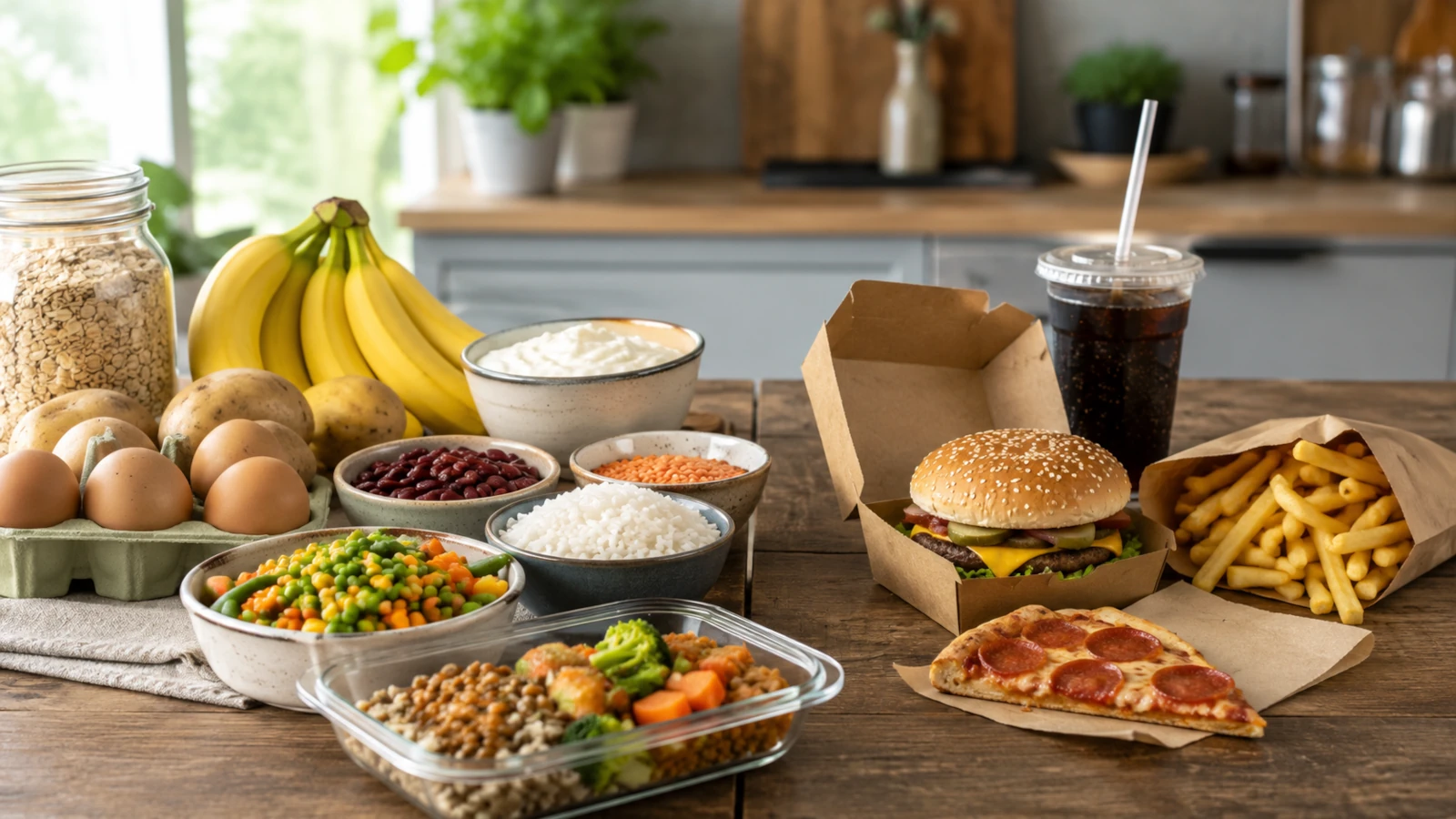
The idea is simple: choose a small set of basic foods — usually 3 protein sources, 3 fat sources and 3 carbohydrate sources — and build your meals from them. Vegetables, fruit, herbs, spices and lower-calorie extras can be added flexibly.
In short: the 3-3-3 protein rule is not a magic diet. It is a simple method to make eating more structured, easier to plan and more protein-focused.This can be especially helpful for beginners. Many people do not fail because they have never heard of protein, calories or macros. They fail because every meal, every grocery trip and every tracking decision becomes too complicated.
TL;DR
- The 3-3-3 protein rule is not an official scientific protein standard.
- It usually means choosing 3 protein sources, 3 fat sources and 3 carb sources.
- You then build simple meals from those foods for several days or one week.
- The method can make meal prep, grocery shopping and tracking much easier.
- It works best when you still track protein, calories and portion sizes.
- It does not automatically cause fat loss or muscle gain.
- Your overall context still matters: calories, protein intake, training, steps and consistency.
- For active people, around 1.4–2.0 g of protein per kg of body weight per day is often a useful orientation range.
What does the 3-3-3 protein rule mean?
The most common version of the 3-3-3 method comes from macro tracking and meal prep.You choose:
- 3 protein sources
- 3 fat sources
- 3 carbohydrate sources
Example:
- Protein: chicken breast, Greek yogurt, eggs
- Fat: olive oil, nuts, cheese
- Carbs: rice, potatoes, oats
- Flexible extras: vegetables, salad, fruit, herbs, spices and lower-calorie sauces
- chicken with rice, vegetables and olive oil
- Greek yogurt with oats, fruit and nuts
- eggs with potatoes, vegetables and some cheese
- chicken potato skillet with salad
- Greek yogurt bowl with oats and berries
Why can the 3-3-3 method work?
The main benefit is not that the number 3 has a special metabolic effect. The main benefit is simplicity.Many nutrition plans fail for three common reasons:
- too many decisions
- complicated grocery shopping
- time-consuming tracking
When you use fewer basic foods, it becomes easier to know:
- what you need to buy
- which foods support your goal
- how many calories your usual portions contain
- how much protein you roughly get
- which meals actually keep you full
The simpler your system is, the more likely you are to follow it in real life.That is why the method fits well with meal prep, calorie tracking and repeatable go-to meals.
Related:
Is it really a protein rule?
Only partly.The name makes it sound like there is a specific protein target behind the method. But in practice, the 3-3-3 method mostly tells you which food groups to choose.
It does not automatically answer these questions:
- How much protein do you need per day?
- How many calories fit your goal?
- How large should your portions be?
- How much fat and carbohydrate makes sense for you?
- Does the method fit your training, hunger and daily life?
You can choose 3 protein sources and still eat too little protein if your portions are too small. You can also overshoot your calories if fat sources, sauces and snacks are not controlled.
Example:
- 30 g of nuts can add calories quickly.
- 1 tablespoon of oil can make a meal much more calorie-dense.
- Cheese, mayo, butter and nut butter are not bad foods, but they need portion control.
Related articles:
How much protein do you need?
People without a specific athletic goal often need less protein than fitness content suggests. But if you lift weights, want to build muscle or want to maintain muscle during a diet, protein becomes more important.For active people, a common practical range is around 1.4 to 2.0 g of protein per kg of body weight per day.
Example for a 75 kg person:
- 1.4 g/kg = about 105 g protein per day
- 1.6 g/kg = about 120 g protein per day
- 2.0 g/kg = about 150 g protein per day
The better Athletic-AI version of the 3-3-3 method
If you want to use the 3-3-3 rule in a useful way, do not treat it like a strict diet law. Use it as a practical food system.Choose 3 strong protein sources, 3 useful carb sources and 3 easy-to-portion fat sources — then add vegetables, fruit and seasonings flexibly.
1. Choose 3 protein sources
Good options include:- chicken breast, turkey breast or lean ground meat
- eggs or egg whites
- Greek yogurt, cottage cheese or low-fat quark
- tuna, salmon or shrimp
- tofu, tempeh, lentils, beans or chickpeas
- whey or vegan protein powder as a supplement
2. Choose 3 carbohydrate sources
Good options include:- rice
- potatoes
- oats
- whole grain pasta
- bread or wraps
- quinoa, bulgur or couscous
3. Choose 3 fat sources
Good options include:- olive oil or canola oil
- nuts or seeds
- avocado
- cheese
- eggs
- salmon
4. Add vegetables and fruit flexibly
Vegetables and fruit do not have to be tightly limited. Especially vegetables help make meals larger, more filling and more nutrient-rich.Good flexible extras include:
- bell pepper
- zucchini
- mushrooms
- broccoli
- spinach
- salad
- berries
- apple
- banana
Example: a high-protein 3-3-3 day
Here is a simple example day.Chosen foods
- Protein: Greek yogurt, chicken breast, eggs
- Carbs: oats, rice, potatoes
- Fat: nuts, olive oil, cheese
- Flexible extras: berries, broccoli, bell pepper, salad, spices
Breakfast
Greek yogurt with oats, berries and a small portion of nuts.Why it works:
High in protein, easy to prepare and useful if you want a quick breakfast without much cooking.
Lunch
Chicken rice bowl with broccoli, bell pepper and a little olive oil.Why it works:
Easy to track, easy to prepare and simple to change with different spices.
Dinner
Egg and potato skillet with vegetables and some cheese.Why it works:
Filling, warm, realistic and not complicated.
Optional snack
Greek yogurt, a boiled egg or a small portion of nuts — depending on your remaining calories and macros.Who is the 3-3-3 protein rule good for?
The method can be helpful if you:- want to start tracking your nutrition
- often do not know what to cook
- want easier meal prep
- want to eat more protein
- want to plan grocery shopping better
- want to reduce random snacking
- need structure during a fat loss phase
- do not want to plan every meal from scratch
Who should be careful with it?
The 3-3-3 method may not be ideal if you need a lot of food variety or feel restricted quickly.It can also become a problem if you turn it into a rigid rule.
Less useful approaches would be:
- eating the exact same foods every day
- cutting vegetables and fruit too much
- thinking only in macros
- avoiding social meals
- splitting foods into allowed and forbidden
- not portioning fat sources
- guessing protein intake without checking it
A method is only useful if you can follow it long term without constant stress.
Common mistakes with the 3-3-3 protein rule
Mistake 1: Too little protein per meal
A meal is not automatically high-protein just because it contains a protein source.A little yogurt, one egg or a bit of cheese can be part of a meal. But a true high-protein meal usually needs enough of that protein source.
Mistake 2: Not measuring fat sources
Oil, nuts, cheese, butter, nut butter and mayo can add calories very quickly.You do not have to avoid them. But especially in the beginning, it helps to portion them consciously.
Mistake 3: Cutting carbs unnecessarily
The method intentionally includes carbohydrate sources. Rice, potatoes, oats and whole grain products can fit very well into a fitness-focused diet.Cutting carbs too aggressively can make training, satiety and everyday life harder than necessary.
Mistake 4: Forgetting vegetables
If you only think about protein, fat and carbs, you may miss volume, fiber and micronutrients.Vegetables are not decoration. They make meals bigger, more filling and more nutritious.
Mistake 5: Confusing the method with a diet
The 3-3-3 rule does not automatically create a calorie deficit. If you want to lose weight, you still need to eat fewer calories than you burn on average.3-3-3 protein rule for fat loss
For fat loss, the method can be very useful because it creates structure.A simple food system can help you:
- prepare protein-rich meals
- reduce random high-calorie choices
- plan groceries more easily
- learn portion sizes
- build more filling meals
If your 3 fat sources are very calorie-dense, your portions are too large or many snacks are added, you can still gain weight despite using the 3-3-3 method.
A useful fat loss setup would include:
- enough protein
- a moderate calorie deficit
- strength training
- enough steps
- plenty of vegetables and fiber
- realistic portion sizes
- a plan you can follow for several weeks
3-3-3 protein rule for muscle gain
The method can also help with muscle gain. Here, the focus is not on eating as little as possible, but on eating enough energy and protein consistently.A good 3-3-3 setup for muscle gain could look like this:
- Protein: chicken, cottage cheese, eggs
- Carbs: rice, oats, pasta
- Fat: olive oil, nuts, cheese
- enough total calories
- enough protein
- progressive strength training
- good recovery and sleep
- consistent meals instead of random eating
Related:
How to use the 3-3-3 method with Athletic-AI
The method becomes much more practical when you do not only plan it in your head, but actually use it in your daily tracking.With Athletic-AI, you can turn the 3-3-3 rule into a real nutrition system:
- save and reuse foods
- add recurring meals to your diary faster
- plan recipes with portions and nutrition values
- keep an eye on protein, calories, fat and carbs
- use grocery lists for repeatable meals
- plan pantry foods more easily
- structure meals for today and tomorrow
Example:
- Greek yogurt breakfast as a saved meal
- chicken rice bowl as a recipe
- egg potato skillet as dinner
- ingredients added directly to your grocery list
Athletic-AI does not help you eat perfectly. It helps you make your nutrition more understandable, more structured and more realistic.
Conclusion: is the 3-3-3 protein rule useful?
Yes, the 3-3-3 protein rule can be useful — if you understand it correctly.It is not a magic protein formula and not a scientific trick. It is a simple system for nutrition, meal prep and macro tracking.
Its biggest benefit is simplification:
- less decision stress
- easier grocery shopping
- easier tracking
- repeatable meals
- better protein planning
The best version is:
Choose a few strong basic foods, track them properly, add vegetables and fruit flexibly — and adjust the portions to your goal.Then the 3-3-3 method can be a very useful starting point for a structured, high-protein and realistic diet.
FAQ: 3-3-3 protein rule
What is the 3-3-3 protein rule?
The 3-3-3 protein rule is a simple meal prep method. You choose 3 protein sources, 3 fat sources and 3 carbohydrate sources, then build several meals from them.Is the 3-3-3 protein rule scientifically proven?
The specific 3-3-3 rule is not an official scientific standard. The useful part is the structure: it can make meal planning easier and help you include enough protein.Does the 3-3-3 protein rule help with weight loss?
It can help with weight loss because it makes meals easier to plan. But fat loss still requires a calorie deficit. Without a deficit, the 3-3-3 method does not automatically lead to fat loss.Can I build muscle with the 3-3-3 method?
It can support muscle gain if you eat enough calories, get enough protein and follow a good strength training plan. The method alone does not build muscle.Do I have to eat the same foods every day?
No. The method uses a small set of base foods, but you can create variety with different vegetables, fruits, spices, herbs, sauces and cooking methods.Do vegetables and fruit count as part of the 3 foods?
In many versions, vegetables and fruit are added flexibly. For real-life use, it makes sense to include vegetables freely and plan fruit according to your calories and goal.Which protein sources work well for the 3-3-3 method?
Good options include chicken, turkey, eggs, Greek yogurt, cottage cheese, fish, tofu, tempeh, lentils, beans or protein powder as a supplement.How much protein do I need per day?
That depends on body weight, goal, training and lifestyle. Active people often use a rough range of about 1.4 to 2.0 g of protein per kg of body weight per day.Sources and further reading
- Stronger U – 3-3-3 Method Handout
- International Society of Sports Nutrition Position Stand: Protein and Exercise
- Morton et al. – Protein supplementation and resistance training: systematic review and meta-analysis
- Harvard T.H. Chan School of Public Health – Healthy Eating Plate