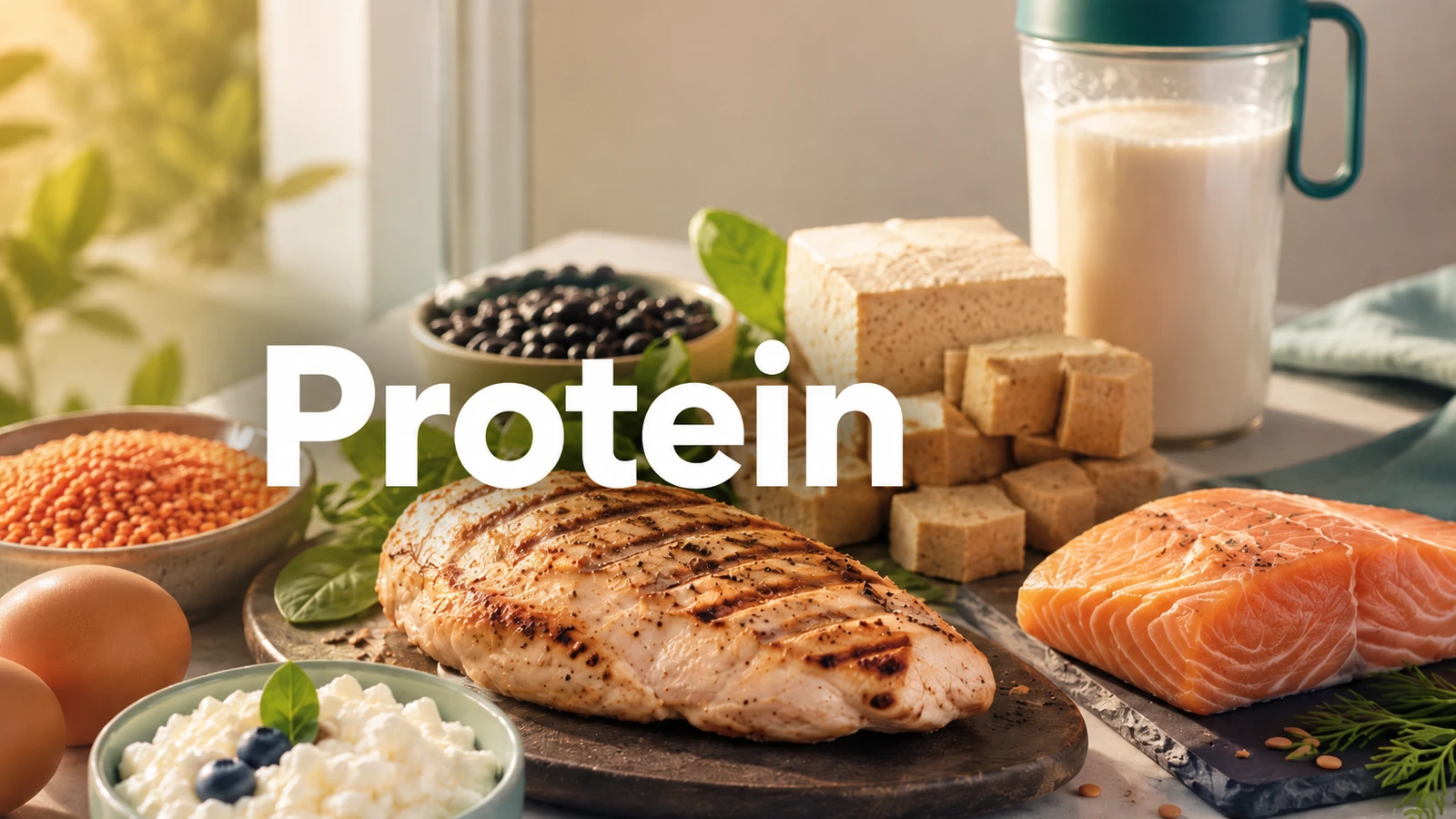
Which foods should you use to actually reach that target?Protein is not just one single thing in everyday nutrition. Some foods provide a lot of protein with relatively few calories. Others also bring more fat or carbohydrates. Some are very filling, some are extremely practical, and plant-based sources may require a bit more planning.
This article gives you a simple overview of the most useful protein sources for fat loss, muscle gain and everyday fitness nutrition.
If you have not calculated your protein target yet, start here: Calculate your protein needs – a simple formula without overthinking.
Quick summary
- Good protein sources provide enough protein per serving and fit your calorie target.
- Animal-based protein sources usually contain all essential amino acids.
- Plant-based protein sources can work very well, but combinations and total intake matter more.
- For muscle gain, total daily protein comes first, then quality, distribution and consistency.
- For fat loss, lean and filling protein sources are especially useful.
- Protein shakes are not mandatory, but they can be a practical tool.
1) What makes a good protein source?
A good protein source is more than just a food that contains a little protein. For fitness nutrition, several things matter:- Protein amount: How much protein does one normal serving provide?
- Calorie density: How many calories come with that protein?
- Amino acid profile: Does it contain all essential amino acids?
- Satiety: Does it keep you full?
- Tolerance: Does it fit your digestion, preferences and possible intolerances?
- Practicality: Can you eat it regularly without stress?
The best protein source is not always the perfect one on paper. It is the one you can consistently include in your real life.
2) Animal-based protein sources
Animal-based protein sources are often easy to use because they provide a lot of protein per serving and usually have a complete amino acid profile.Eggs
Eggs are versatile and high-quality. They work for breakfast, dinner or snacks. Whole eggs also contain fat, so they should fit your calorie target.Skyr, low-fat quark and Greek yogurt
These are very practical for fitness nutrition because they provide a lot of protein, are easy to prepare and work well as breakfast, snack or dessert.Chicken and turkey
Chicken breast and turkey breast are classic lean protein sources. They are easy to meal prep and combine well with rice, potatoes, pasta or vegetables.Beef
Beef can provide high-quality protein plus nutrients such as iron, zinc and B vitamins. Lean cuts or lean minced beef are usually easier to fit into a fat-loss phase than very fatty options.Fish and seafood
Lean fish provides a lot of protein with relatively few calories. Fatty fish such as salmon also provides omega-3 fatty acids but contains more calories.Cheese and deli meats
Some options can be useful, such as cottage cheese, light cheese, turkey slices or lean ham. But many cheeses and processed meats also contain a lot of fat, salt and calories, so checking the label matters.3) Plant-based protein sources
Plant-based protein can absolutely support muscle gain and fat loss. It often just needs more conscious planning.Tofu
Tofu is one of the most practical plant-based protein sources. It works in bowls, curries, stir-fries, wraps and meal prep.Tempeh
Tempeh is made from fermented soybeans. It is protein-rich, has a firm texture and works especially well when marinated.Seitan
Seitan is made from wheat gluten and is very high in protein. It is not suitable for people with coeliac disease or gluten intolerance.Lentils, beans and chickpeas
Legumes provide protein, fiber, micronutrients and carbohydrates. They are very filling, but usually provide less protein per calorie than very lean animal-based sources.Soy products
Soy milk, soy yogurt and soy-based alternatives can be useful, but the nutrition label matters. Not every soy product is automatically high in protein.Nuts and seeds
Nuts and seeds contain protein, but they are mainly fat sources. They can be healthy and nutrient-dense, but they are not ideal as a main protein source in a strict calorie deficit.Nuts are good foods, but they are not low-calorie protein sources.
4) Protein powder: useful or unnecessary?
Protein powder is not mandatory. It is simply a convenient tool.It can help when:
- you struggle to reach your protein target
- you have little time
- you need something easy after training
- you want a low-calorie protein option
- you do not want to rely on the same foods every day
Protein powder does not replace a good diet. It can simply make your diet easier.
5) Animal-based or plant-based: which is better?
It depends.Animal-based sources are often easier because they provide a lot of complete protein per serving. Plant-based sources can provide more fiber and variety, but total protein and combinations matter more.
Useful combinations include:
- lentils with rice
- beans with corn
- chickpeas with whole grains
- tofu with rice or noodles
- pea protein with rice protein
6) Best protein sources for muscle gain
For muscle gain, the most useful protein sources are the ones that help you reliably reach your daily target.Good options include:
- skyr
- low-fat quark
- chicken breast
- turkey breast
- eggs
- lean beef
- fish
- whey protein
- tofu
- tempeh
- seitan
7) Best protein sources for fat loss
During fat loss, lean and filling protein sources are especially useful.Good options include:
- skyr
- low-fat quark
- cottage cheese
- chicken breast
- turkey breast
- lean fish
- shrimp
- tuna in water
- tofu
- seitan
- protein shake with water
In a diet, the most useful protein source is often the one that gives you a lot of protein and satiety for relatively few calories.
8) Protein sources for meal prep
Good meal-prep protein sources are easy to cook, store and combine.Practical options include:
- chicken or turkey
- lean minced meat
- tofu or smoked tofu
- lentils
- beans
- chickpeas
- boiled eggs
- tuna
- skyr or quark as a snack
9) Common mistakes with protein sources
- Using nuts as a main protein source: they are mainly fat sources and very calorie-dense.
- Overestimating cheese: many cheeses provide protein, but also a lot of fat.
- Planning too little plant-based protein: vegan diets often need more conscious planning.
- Thinking shakes are required: they are useful, but not mandatory.
- Ignoring calories: protein sources still count toward your energy intake.
- Eating too little protein per meal: a small yogurt or a little cheese may not be enough.
10) Protein sources with Athletic-AI
Athletic-AI can help you see whether your meals really contain enough protein.This is useful because many people misjudge their intake. A meal can feel healthy but contain very little protein, or a food can look protein-rich while also bringing a lot of calories.
With tracking, you can see:
- which meals are too low in protein
- which foods help you reach your target
- whether your protein intake fits your calorie goal
- whether your diet is consistent during fat loss or muscle gain
FAQ
What is the best protein source?The best protein source is one that provides enough protein, fits your goal and is easy for you to eat consistently.
Are plant-based proteins worse?
Not automatically. They can work very well, but total protein, combinations and food choices matter more.
Do I need meat to build muscle?
No. Muscle gain is possible with vegetarian or vegan diets if protein, calories, training and recovery are planned well.
Are shakes better than normal food?
No. Shakes are not better. They are simply convenient.
Are nuts good protein sources?
Nuts contain protein, but they are mainly fat sources and very calorie-dense.
Bottom line
Protein sources do not have to be complicated.A simple rule works well:
Every main meal should include one clear protein source.Animal-based protein sources are often simple and complete. Plant-based sources can be just as useful, but usually require more planning. Protein shakes are optional, not mandatory.
In the end, the best protein source is the one that helps you reach your target consistently while fitting your calories, preferences and everyday life.
Sources and further reading
- International Society of Sports Nutrition – Position Stand: Protein and Exercise
- Protein quality, amino acids and digestibility
- Plant proteins and protein quality
- Protein and amino acids in vegetarian diets
- Academy of Nutrition and Dietetics – Vegetarian and Vegan Diets