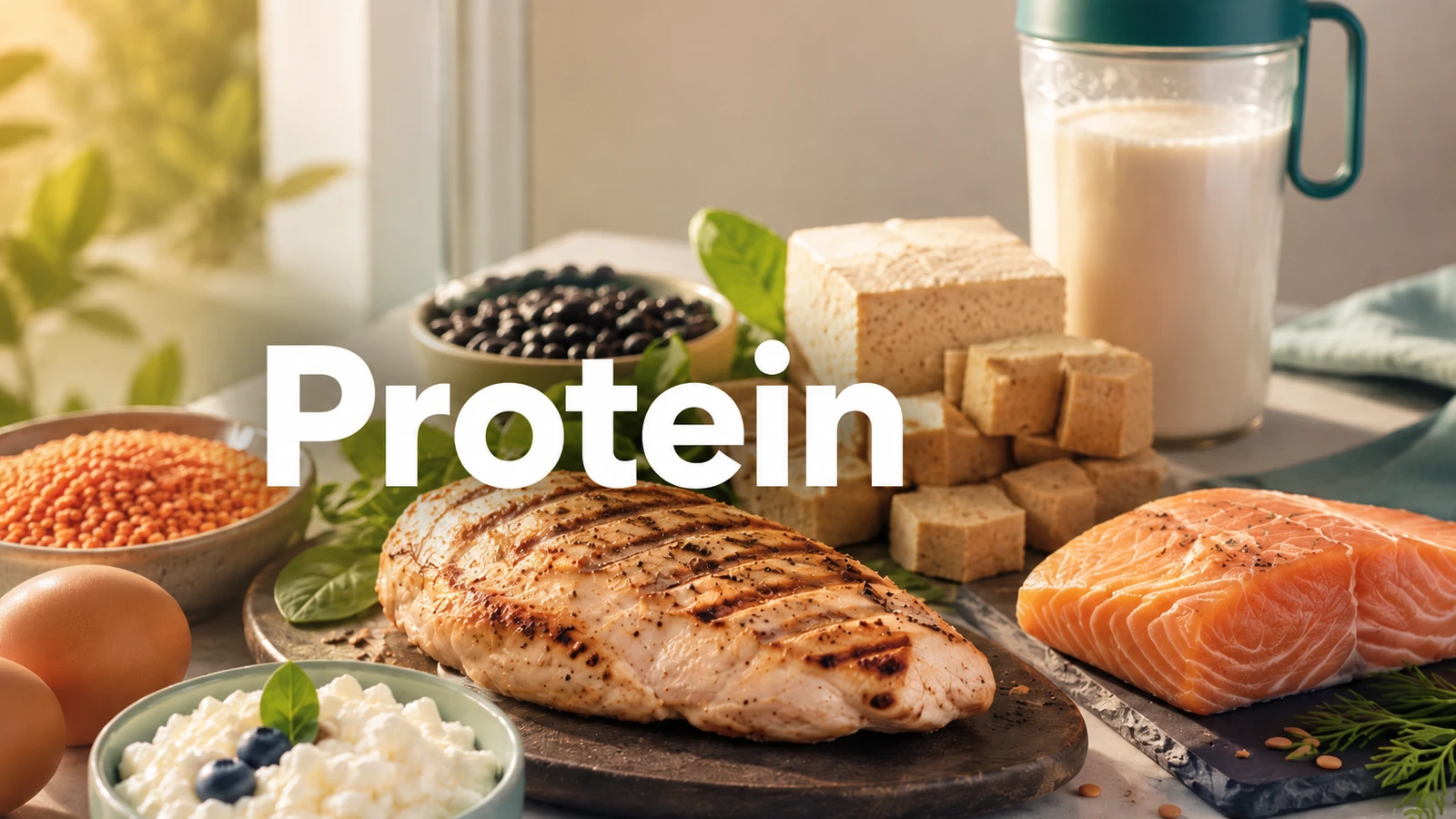
It is not only about building muscle. Protein also supports satiety, recovery, muscle maintenance and a more structured diet.
Protein is not magic — but it is one of the most useful levers in fitness nutrition.
Quick summary
- Protein helps your body build and maintain muscle.
- In a calorie deficit, enough protein lowers the risk of losing muscle.
- Protein-rich meals often keep you full for longer.
- A practical range for many active people is around 1.6–2.2 g protein per kg body weight.
- If body weight is very high, goal weight or lean mass can be a better reference.
- You do not need perfect timing. Consistency over the day matters more.
1) What does protein do in the body?
Protein provides amino acids. Your body uses them as building blocks for muscles, organs, enzymes, immune function, connective tissue and many repair processes.For fitness goals, the muscle-related part is especially relevant.
When you train, your muscles receive a stimulus. Protein helps provide the building blocks your body needs to repair and adapt.
2) Protein during fat loss
When you lose weight, you want to lose mostly fat — not muscle.A calorie deficit is necessary for fat loss, but it also means your body receives less energy. If protein intake is too low and strength training is missing, the risk of losing muscle increases.
Protein helps because it:
- supports muscle maintenance
- makes meals more filling
- can reduce cravings for some people
- helps structure meals more easily
3) Protein for muscle gain
For muscle gain, you need a training stimulus and enough building material.Strength training gives the signal. Protein supports the adaptation.
You do not need to eat extreme amounts. More is not automatically better. Once your intake is high enough, extra protein usually does not build extra muscle by itself.
Training gives the signal. Protein provides the building blocks. Recovery makes adaptation possible.
4) How much protein do you need?
A practical range for many active people is:- fat loss: around 1.6–2.2 g per kg body weight
- muscle gain: around 1.6–2.0 g per kg body weight
- general fitness: often around 1.4–1.8 g per kg body weight is already useful
Example:
If you weigh 80 kg, a practical target could be around 130–175 g protein per day, depending on goal, training and preference.
5) Protein timing: does it matter?
Protein timing is less important than your total daily intake.Still, a simple structure can help:
- 3 meals per day → roughly 30–45 g protein per meal
- 4 meals per day → roughly 25–35 g protein per meal
- include one clear protein source in every main meal
6) Good protein sources
Animal-based options:- lean meat
- fish
- eggs
- low-fat quark, skyr or Greek yogurt
- cottage cheese
- whey or casein protein powder
- tofu and tempeh
- lentils, beans and chickpeas
- soy yogurt or soy quark alternatives
- seitan
- vegan protein powders
7) Common mistakes
- Only eating protein at dinner — spread it more evenly if possible.
- Counting foods as high-protein when they are mostly fat or carbs — nuts, cheese and some bars can be calorie-dense.
- Using shakes as a replacement for structure — shakes are useful, but not mandatory.
- Setting unrealistic targets — a target you never hit is not helpful.
Bottom line
Protein is one of the strongest nutrition levers for fitness goals.It supports muscle maintenance, muscle gain, satiety and recovery. You do not need perfection — just a realistic target and a meal structure you can repeat.
Athletic-AI can help you calculate and track your protein target so you can see whether your meals actually match your goal.